Exploring the Moderating Role of Curiosity in the Relationship Between Ethical Awareness and Consumer Behaviors†
Article information
Abstract
Despite the increasing interest in ethical consumption, the intention–behavior gap (I-B gap), where consumers' ethical intentions do not translate into actual behavior, remains a significant challenge. This study aimed to explore the role of curiosity in overcoming this gap. In Study 1, an online survey was conducted with 400 Korean university students to examine whether trait curiosity moderates the relationship between ethical consumption intention and prioritization. In Study 2, an experimental approach with 300 participants was used to investigate whether information gap and ambiguity techniques induce situational curiosity. Results from the first study revealed that although the hypothesized moderating effect of trait curiosity was not supported, exploratory analyses indicated that it independently predicted prioritization, and Stress Tolerance exhibited a negative moderating effect. In the subsequent experiment, while the ambiguity manipulation did not work as intended, exploratory observations suggested that curiosity may increase as information is perceived to be sufficient, showing a pattern contrary to the existing information gap theory. These exploratory findings suggest that transparent provision of information is more effective in eliciting curiosity in the context of ethical consumption.
1. Introduction
Today, social innovation enterprises such as non-profit startups and social ventures aiming for social innovation are rapidly increasing worldwide. As of 2024, over 10 million social innovation enterprises are active globally, generating more than 2 trillion dollars in annual revenue and creating over 200 million jobs (Schwab Foundation for Social Entrepreneurship, 2024). In South Korea, since the introduction of the social enterprise certification system in 2007, the number of certified enterprises has surged from 55 to approximately 3,700 in 2024. Notably, disability-friendly companies that focus on employing people with disabilities, providing social services, and donating profits have shown remarkable growth. These companies play a key role in supporting the independence and social participation of people with disabilities. At the same time, ethical values of companies have emerged as an important criterion in consumers’ purchasing decisions, spreading interest in ‘ethical consumption’ and increasing public attention toward social innovation enterprises. For example, the social venture ‘Donggubat,’ which produces eco-friendly soap by employing people with developmental disabilities, employed 54 out of 116 total staff as of 2024 and achieved approximately 14 billion KRW in sales in 2023, demonstrating clear success.
However, mere interest or exposure to ethical issues does not directly translate into purchasing, investing, or sponsoring behaviors. Active consumer participation is essential to securing the sustainability of social innovation enterprises. Therefore, identifying the psychological factors that operate in the process of converting ‘interest’ into ‘action’ is an important task. Especially, to establish a stable growth foundation for disability-friendly companies, it is necessary to identify decisive mediating and moderating variables that convert people’s perceptions into actual consumer behavior. Through this, companies can design more effective marketing and communication strategies and further spread social momentum supporting people with disabilities.
Intention–Behavior Gap
As mentioned in the introduction, positive interest in social innovation enterprises does not necessarily lead directly to actual consumer behavior. In the literature on ethical consumption, this phenomenon—where consumers’ good intentions do not result in actual purchases—is explained as the ‘Intention–Behavior Gap (I-B gap)’ (Carrington, Neville, & Whitwell, 2014). For instance, a survey by Futerra Sustainability Communications (2005) found that 89% of UK consumers expressed deep concern about ethical issues, but only 3% actually purchased ethical products. Similarly, a study on Korean consumers’ awareness and practice of sustainability revealed that while 82.2% of respondents agreed that environmentally sustainable consumption is necessary, only 25.5% made efforts to purchase eco-friendly products (Lee, 2020, as cited in Kim et al., 2022). This shows that consumers’ ethical intentions did not translate into actual purchasing behavior.
Carrington et al. (2014) summarized that this discrepancy is moderated by four key factors. The first is ‘prioritizing ethical concerns.’ Since consumers cannot focus on all ethical issues simultaneously amid busy daily lives, they distinguish their ethical concerns into primary and secondary priorities. Ethical issues that become a consumer’s primary concern resonate deeply with their core values, prompting active information seeking and integration of the issue into their identity and lifestyle. The second factor is ‘Plans and habits,’ which helps avoid impulsive purchases or other temptations in stores and breaks existing unethical consumption habits to form new ethical habits. Repeated execution of such plans gradually establishes habits, making ethical consumption occur naturally without much effort. The third factor is ‘Commitment and Sacrifice.’ To establish ethical consumption as a long-term daily routine, consumers often need to accept sacrifices such as paying higher costs or tolerating reduced convenience and quality. Such high levels of commitment and sacrifice manifest only for major ethical concerns closely linked to the consumer’s self-identity and values. The last factor is ‘behavioral modes,’ which refers to how the previous three factors (prioritization, plans and habits, commitment and sacrifice) concretely manifest in actual purchasing environments.
Casais and Faria (2022) empirically tested Carrington’s model through a survey-based study. The results showed that ‘plans and habis’ significantly mediated the relationship between ethical intention and behavior, while ‘commitment and sacrifice’ played a moderating role that strengthened this relationship. This suggests that cognitive prioritization and structured planning are essential for consumers’ ethical intentions to translate into behavior.
While existing literature has succeeded in identifying structural factors and pathways to reduce the I-B gap, it still lacks explanation of the psychological drivers that trigger the connection between key factors to the next stage. In other words, fundamental questions remain about how consumers select a particular ethical issue as their ‘primary concern’ among numerous social issues and what motivates them to voluntarily seek information about unfamiliar social innovation enterprise products. For ethical attitudes to convert into active behavior, an internal motivation to recognize and fill cognitive gaps is essential. Accordingly, this study aims to identify the psychological drivers that elevate ethical issues to personal primary concerns and trigger information seeking behavior as a starting point to overcome the I-B gap.
Curiosity
The psychological driver this study seeks to identify must play a key role in the ethical consumption implementation process proposed by Carrington et al. (2014). They suggested that even if consumers recognize ethical issues, the first step toward behavioral change is securing prioritization of ethical concerns among various personal interests. This prioritization should lead to related information seeking, behavior planning, and habit formation through repeated practice to result in actual ethical consumption behavior. Therefore, the psychological driver of interest in this study should promote prioritization of ethical concerns and possess characteristics that connect to subsequent behavioral implementation.
Considering these requirements, curiosity is a suitable candidate. Curiosity is a motivation that broadens understanding of the environment and others and drives exploration of new information. In social contexts, it enhances openness, receptivity, and empathy, leading to positive interactions (Kashdan et al., 2011). Curiosity also makes individuals aware of information gaps between what they know and do not know, prompting active information seeking behavior to close these gaps. These characteristics can lead individuals to pay more attention to social and ethical issues and recognize specific ethical issues as important considerations among competing interests. Furthermore, curiosity-driven information seeking can lead to knowledge acquisition related to ethical consumption, behavior planning, and sustained practice, aligning theoretically with the behavioral pathway proposed by Carrington et al. (2014).
Previous studies have shown that curiosity promotes prosocial behavior. Kashdan et al. (2013) found that highly curious individuals tend to exhibit non-defensive, non-critical, and inclusive attitudes toward others. Jahantab et al. (2024) reported that explicit social curiosity—direct ways of seeking information about others, such as asking questions—can enhance prosociality like organizational citizenship behavior through social acceptance. Therefore, curiosity may play a positive moderating role in the relationship between ethical awareness and consumption behavior and is expected to contribute to prioritizing specific ethical issues as primary concerns among various social issues.
Accordingly, this study has two purposes. First, it aims to verify whether curiosity acts as a moderating variable in the relationship between ethical issue awareness and ethical consumption behavior. Specifically, it explores whether trait curiosity, as a stable personal characteristic, promotes prioritization of ethical concerns and how this prioritization influences the process of translating awareness into behavior. Second, it examines the effectiveness of situational curiosity-inducing techniques used in advertisements for products from disability-friendly companies. By verifying how various curiosity-inducing treatments enhance consumers’ situational curiosity and whether increasing the number of treatments amplifies the effect, this study seeks to provide foundational data for marketing strategy development for disability-friendly enterprises.
Directions for Achieving the Sustainable Development Goals (SDGs)
This study aligns with the Sustainable Development Goals (SDGs). Theoretically, by proposing curiosity as a moderating variable between problem awareness and consumption behavior, it expands existing ethical consumption behavior models and offers a new paradigm in consumer behavior research. Practically, it enhances actionable applicability by providing concrete guidelines for disability-friendly social innovation enterprises to utilize curiosity-based marketing strategies. Furthermore, at the policy level, it suggests strategies to incorporate curiosity into public institutions and local governments’ disability support policies and campaigns to increase citizen participation and acceptance. Ultimately, this promotes the spread of ethical consumption, contributing to the independence of people with disabilities and the creation of an inclusive social environment. These effects specifically contribute to achieving SDG 8 (Decent Work and Economic Growth), SDG 10 (Reduced Inequalities), and SDG 12 (Responsible Consumption and Production), playing a crucial role in strengthening overall social sustainability and inclusiveness.
2. Study 1
In Study 1, we analyze the impact of individuals' internal cognitive processes on consumer behavior by integrating the psychological factor of ‘curiosity’ and the cognitive stage of ‘prioritization’ into the model of the intention–behavior pathway in consumption scenes proposed by Casais and Faria (2022). In particular, we explore how curiosity influences Prioritizing ethical concerns, which serves as the starting point of the pathway leading to ethical consumption. The research hypothesis and model are as follows (Figure 1).
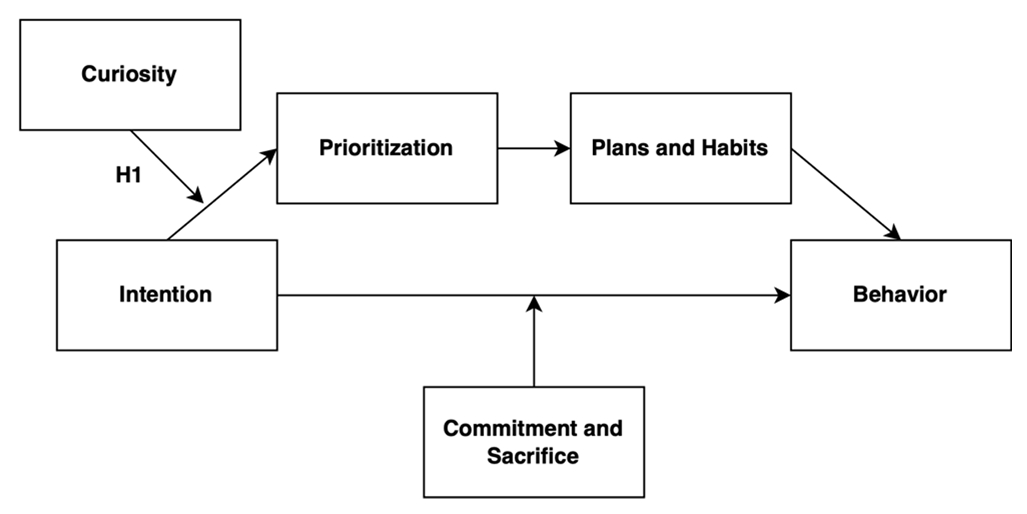
Research Model.
H1. Trait curiosity will exert a positive moderating effect between intention and prioritization in the I-B Gap model.
Method
1) Participants
Referring to the prior study (Casais & Faria, 2022), which was based on 346 adults with experience in ethical consumption, this study conducted an online survey targeting a total of 400 Korean university students aged 19 or older. The final participants consisted of 199 males and 201 females, with an average age of 22.41 years (M = 22.41, SD = 2.15). Participants were recruited through Dataspring, a professional survey company, and before participating, they reviewed and consented to the explanation of the study’s purpose and procedures. Upon completing the survey, participants were compensated with 400 points equivalent to 400 KRW in cash.
2) Materials and Procedure
The questionnaire consisted of 2 items asking about demographic characteristics (age and gender), 20 items related to ethical consumption reconstructed by translating and adapting the measurement tools from the prior study (Casais & Faria, 2022) into Korean, and 24 items measuring trait curiosity. Trait curiosity was measured using Five-Dimensional Curiosity Scale-Revised(5DCR) developed by Kashdan et al. (2020). Except for demographic questions and some items identifying key ethical issues, all variables were measured on a 7-point Likert scale. To prevent missing data due to skipped responses, the online system was configured so that participants had to answer all questions before submitting and completing the survey.
Results
1) Awareness of Ethical Issues and Status of Consumer Behavior
Before the main analysis, to identify which ethical issues the participants were mainly interested in, the frequency of responses regarding areas of interest was examined (see Table 1). Multiple responses were allowed for this item. Respondents showed the highest interest in ‘environmental’ issues (63.50%, 254 participants). This was followed by ‘labor/human rights’ issues at 42.50% (170 participants), ‘animal welfare’ (32.50%, 130 participants), ‘local community’ (26.25%, 105 participants), ‘fair trade’ (22.75%, 91 participants), and ‘disability inclusion’ (13.75%, 55 participants).
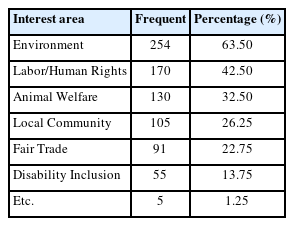
Status of Respondents’ Interest in Ethical Issues (Multiple Responses Allowed)
A paired t-test was conducted to verify whether this interest actually translates into consumer behavior, i.e., whether the I-B gap underlying this study exists in the sample. The analysis showed that the mean of ethical consumption intention was 4.28 (SD = 1.24), whereas the mean of actual ethical consumption behavior was 3.63 (SD = 1.34). The mean difference between the two variables was statistically significant (t (399) = 12.06, p < .001), with ethical consumption intention being significantly higher than behavior. These results empirically demonstrate that the Korean university student sample experiences a clear I-B gap, showing high interest in various ethical values such as environment and human rights but failing to translate this into immediate action. Therefore, there is a need to explore specific mechanisms that intervene in the process of converting intention into behavior beyond simply increasing intention.
2) Replication
To replicate and verify the moderated sequential mediation model presented in prior research (Casais & Faria, 2022), the analysis was conducted in two stages. First, to confirm whether the mediation paths proposed in the prior study could be replicated in a sample of Korean university students, the variable of prioritization of ethical concerns was additionally included, and a sequential mediation analysis was performed. Before including the variables of commitment and sacrifice, the basic sequential mediation model was tested, and the cognitive mechanism from the prior study was significantly supported in this study as well (see Table 2). An indirect effect (B = 0.056) was found where ethical consumption intention sequentially influenced prioritization and planning stages, leading to behavior, and the 95% bootstrap confidence interval [0.029, 0.089] did not include zero, indicating statistical significance.

Results of Mediation and Sequential Mediation Effects Testing
Next, the moderated mediation model was analyzed by adding the moderating effects of commitment and sacrifice on the direct path between intention and behavior. The analysis showed that the interaction terms between intention and commitment and sacrifice on behavior were not statistically significant (see Table 3; B = 0.027, p = .264, 95% CI [-0.021, 0.076]). Examining the conditional direct effects at different levels of the moderators revealed that regardless of the levels of commitment and sacrifice (low, average, high), the positive effect of intention on behavior was significant, but differences in effect size were not statistically supported. Unlike the prior study, the moderating effects of commitment and sacrifice were not replicated in this data.
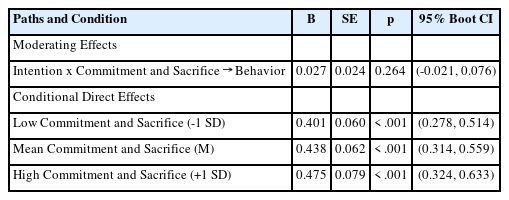
Results of Moderating Effects of Commitment and Sacrifice and Conditional Direct Effects Testing
3) Hypothesis Testing
To test the hypothesis that trait curiosity would moderate the relationship be-tween ethical consumption intention and prioritization, a moderated sequential mediation model analysis was conducted. The interaction term between intention and curiosity did not have a significant effect on prioritization (B = -0.003, p = .961). To verify differences in conditional indirect effects according to levels of curiosity, the Index of Moderated Mediation was examined, and its 95% confidence interval included zero, indicating no statistical significance (Index = 0.000, 95% CI [-0.018, 0.015]). Additionally, simple slope analysis showed that intention predicted prioritization similarly in both low curiosity (B = 0.366, p < .001) and high curiosity groups (B = 0.362, p < .001). In summary, the moderating and moderated mediation effects of trait curiosity were not supported in this study, leading to the rejection of Hypothesis 1. However, trait curiosity independently had a significant positive effect on prioritization (B = 0.151, p = .045), indicating that individuals with higher levels of curiosity tend to explore and prioritize ethical issues themselves, regardless of the level of ethical consumption intention.
4) Post-hoc Analysis
In the previous analysis, the total score of the 5DCR scale was used to test the moderating effect of trait curiosity. However, in exploratory analysis, individual sub-factors were entered as independent moderators instead. This multidimensional analytical approach is supported by two reasons. First, theoretically, the 5DCR proposed by Kashdan et al. (2020) conceptualizes curiosity not as a single dimension but as a structure composed of five independent and heterogeneous dimensions, including motivation, emotion, and behavioral styles. Therefore, treating sub-dimensions as a single variable by integration may overlook detailed characteristics of curiosity. Second, statistically, if the directions of effects of each sub-factor on the dependent variable differ, summing them into a single total score may cancel out effects and distort the actual causal relationships between variables. Indeed, the post-hoc analysis results showed that among the 5DCR sub-factors, ‘Joyous Exploration (JE)’ and ‘Stress Tolerance (ST)’ exhibited effects in opposite directions on the path from ethical consumption intention to prioritization, supporting the validity of detailed sub-factor analysis (see Table 4).
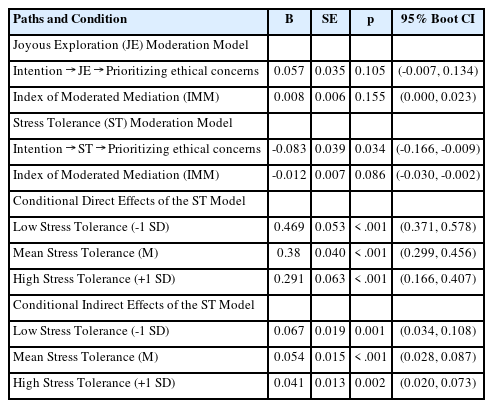
Comparison of Moderating Effects and Moderated Mediation Effects of 5DCR Sub-factors (JE, ST)
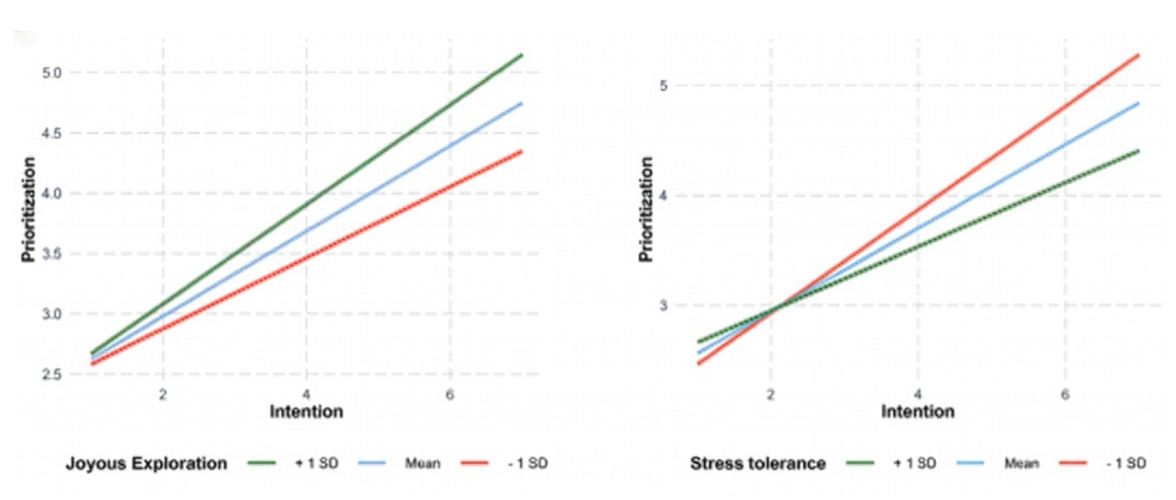
Graph Showing the Interaction Effects of Joyous Exploration and Stress Tolerance among 5DCR Sub-Factors.
Based on this, sub-factor analyses were conducted. In the model with JE as the moderator, the interaction term between intention and JE on prioritization was not statistically significant (B = 0.057, p = .105), and the 95% bootstrap confidence interval of the Index of Moderated Mediation (IMM) included zero, indicating no support for moderated mediation (Index = 0.008, 95% CI [0.000, 0.023]). Although not statistically significant, simple slope analysis showed a tendency for ethical consumption intention to predict prioritization more strongly in the high JE group (B = 0.412) than in the low JE group (B = 0.294). In the model with ST as the moderator, the interaction term between intention and ST had a significant negative effect on prioritization (B = -0.083, p = .034, 95% CI [-0.166, -0.009]). The Index of Moderated Mediation was significant as its 95% bootstrap confidence interval did not include zero (Index = -0.012, 95% CI [-0.030, -0.002]). Simple slope analysis also confirmed that the positive effect of intention on prioritization was relatively weaker when ST was high (B = 0.291, 95% CI [0.166, 0.407]) compared to when ST was low (B = 0.469, 95% CI [0.371, 0.578]). This result is contrary to the hypothesis that trait curiosity would exert a positive moderating effect between intention and prioritization. The interaction effect between JE and ST is illustrated in Figure 2.
Discussion
Study 1 aimed to verify the role of cognitive mechanisms—prioritization and planning—in the process by which ethical consumption intentions translate into actual behavior, and to explore the influence of trait curiosity on this process. The results confirmed that the model from prior research, in which intention sequentially leads to prioritization, then planning, and finally behavior, also holds true for a sample of Korean university students. This reaffirms that, in the domain of ethical consumption, overcoming the intention–behavior gap requires placing specific ethical issues as primary concerns and establishing practical plans for action.
On the other hand, the moderating effects of commitment and sacrifice, which were significant in previous studies, were not supported in this research. This difference can be interpreted as stemming from sample characteristics between the two studies. The prior study recruited participants from an online community specialized in ethical issues and included only respondents who demonstrated both purchase intentions and actual purchase behaviors for ethical reasons. This sampling method targeted a group with already high involvement and commitment to ethical consumption, within which sufficient variability in the spirit of sacrifice existed, possibly allowing the detection of significant moderating effects.
In contrast, this study collected data from Korean university students without preconditions regarding ethical consumption experience or involvement, to examine whether the prior model could be replicated in a general sample. In such a general sample with diverse prior experience and involvement in ethical consumption, the overall level of the spirit of sacrifice may have been low or its variability limited, which could explain the lack of statistically significant moderating effects. Therefore, the results do not imply that the spirit of sacrifice has no effect per se, but rather suggest that the sample did not meet the sufficient level of ethical consumption experience and involvement necessary for the moderating effect to manifest. Future research should consider segmenting samples based on ethical consumption involvement.
The core hypothesis regarding the moderating effect of trait curiosity was rejected. However, a significant finding was that trait curiosity had a direct positive effect on prioritization, independent of intention. This suggests that curiosity functions not as a moderator amplifying existing consumption intentions, but as an in-dependent antecedent that draws attention to ethical issues themselves. Strzelecki et al. (2024), through a systematic literature review, reported that in consumer contexts, curiosity acts as a motivational force directly inducing behaviors such as information seeking, exploratory shopping, and diversity pursuit, and plays an independent role in sustainable consumption by interacting with consumers’ environmental awareness to guide ethical consumption choices. In other words, even individuals with low initial ethical consumption intentions may have sufficient potential, if their trait curiosity is high, to seek new information about ethical issues and prioritize these issues as important in their lives.
An exploratory analysis separating the sub-factors of the 5DCR clearly demonstrated the limitations of treating curiosity as a unidimensional construct and supported the need for a multidimensional approach. Notably, among the sub-factors, Stress Tolerance showed a negative moderating effect by weakening the path from intention to prioritization, contrary to the hypothesis. This unexpected result can be alternatively interpreted by considering that ethical issues inevitably cause psychological discomfort or cognitive dissonance—a form of ‘stress’—to individuals. Individuals scoring high on the Stress Tolerance exhibit curiosity-based on a belief in their ability to cope with anxiety and uncertainty. Those with high scores in this dimension tend to have the greatest psychological flexibility and pain tolerance and are least likely to avoid or respond maladaptively to stressful situations. Paradoxically, this may reduce the pressure to immediately resolve cognitive dissonance. According to the Need for Cognitive Closure theory, lower tolerance for uncertainty and ambiguity strengthens motivation to quickly reach a definite answer (Kruglanski, 2013; Zuo et al., 2025). Therefore, individuals with low Stress Tolerance are strongly motivated to promptly prioritize ethical issues in their lives to quickly alleviate psychological discomfort caused by these issues, whereas those with high Stress Tolerance can endure such discomfort longer and thus may feel less urgency to prioritize these issues immediately.
In conclusion, stimulating the Joyous Exploration tendency, which is the curiosity facet to be explored in the ethical consumption context, may facilitate progression to the next stage. However, a high level of Stress Tolerance—the ability to endure ambiguity and tension—may conversely delay behavioral change.
3. Study 2
In Study 2, an experiment is designed to directly address disability-friendly companies, which are the core ethical concern of this research. Loewenstein(1994) stated that trait curiosity, a stable personal disposition, and state curiosity, which varies depending on the situation, show a positive relationship. Based on this, Daume and Hüttl-Maack (2020) developed curiosity-inducing advertising stimuli and conducted an experiment, finding that advertisements using information gap techniques and ambiguity techniques elicited high levels of curiosity. This study aims to verify whether applying this strategy to disability-friendly companies, that is, in the context of ethical consumption, also significantly increases consumers' levels of curiosity. The research hypothesis is as follows.
H2. The information gap technique and the ambiguity technique will enhance situational curiosity.
Method
1) Participants
Study 2 was conducted as an online experiment with a total of 300 Korean male and female university students aged 19 and above who did not participate in Study 1. The final participants consisted of 145 males and 155 females, with an average age of 22.52 years (SD = 2.53). The sample size for this study was calculated based on the prior study by Daume and Hüttl-Maack (2020), which served as the foundation for the research design. That prior study categorized curiosity-inducing situations into information gap, ambiguity, novelty, and control groups, assigning 70 participants to each group for a total of 280 participants. In the present study, the novelty condition, which did not show significant effects in the prior study, was excluded, and an 'information gap and ambiguity mixed condition' was added, resulting in a total of four groups to be compared. Accordingly, the basic assumption was 70 participants per group as in the prior study, and considering possible data loss due to dropouts, the final sample size was set at 75 participants per group, totaling 300 participants. Participants were randomly assigned to one of the four experimental conditions, resulting in an equal distribution of 75 participants each in the information gap condition, ambiguity condition, information gap and ambiguity mixed condition, and control condition. All participants were recruited through Dataspring, a professional survey company, and participated in the experiment after reading and agreeing to the explanation of the study’s purpose and procedures. Upon completing the survey, participants were compensated with 200 points equivalent to 200 KRW in cash.
2) Materials and Procedure
Due to copyright constraints, the original visual stimuli used in this study are not reproduced here. The stimuli consisted of four variations of a mock advertisement for a solid shampoo bar produced by a real social enterprise. All four conditions featured the identical background and a central image of the shampoo bar. The advertising stimuli in Study 2 consisted of four types: information gap, ambiguity, a mixture of information gap and ambiguity, and a control condition. To ensure that the manipulation intentions for each condition did not overlap, drafts were repeatedly reviewed and expressions were adjusted. Furthermore, the visual elements—such as the placement of phrases, the size of emphasized text, and the position of supplementary explanations—were carefully standardized across conditions.
Participants in the information gap condition read advertisements with no product description and a catchphrase containing blanks (e.g., "Through this shampoo bar, [____] is created"). Participants in the ambiguity condition read advertisements that included product descriptions along with catchphrases unrelated to the product (e.g., "This is not a soap"). In the information gap and ambiguity mixed condition, advertisements were presented that included unrelated catchphrases without product descriptions. Participants in the control condition read advertisements with clearly presented product descriptions.
Afterward, participants in the four groups were given a brief questionnaire based on prior research, consisting of five items in total: three items to verify whether appropriate situational curiosity was induced, and two items to check the manipulation of conditions (measuring the degree of information provided and the degree of confusion).
Results
1) Manipulation Check
To verify whether the presented stimuli were intentionally manipulated, responses to the condition manipulation check items were examined. The degree of information provided was measured by a single item to check the information gap manipulation, and the degree of confusion was measured by a single item to check the ambiguity manipulation.
First, to verify the information gap manipulation, an ANOVA was conducted on the information provision scores. The information gap condition (M = 3.23) and the mixed condition (M = 3.01) were significantly lower than the control group (M = 5.09, p < .001), confirming that the information gap manipulation was successfully implemented.
On the other hand, to verify the ambiguity manipulation, confusion scores were analyzed. The ambiguity condition (M = 3.36) did not show a statistically significant difference from the control group (M = 2.77, p = .136), indicating that the ambiguity manipulation failed.
Notably, in the information gap condition, confusion (M = 4.47) was significantly higher compared to the control group, revealing an unintended effect where the absence of information caused cognitive confusion beyond mere curiosity. It was difficult to conclude that the ambiguity condition increased confusion. Therefore, hypothesis testing based on comparisons between conditions was deemed invalid.
Accordingly, this study conducted an additional exploratory analysis focusing on how participants actually perceived the stimuli, rather than relying on comparisons between conditions.
2) Regression Analysis Model Using Perceived Variables
As a result of conducting regression analysis using the perceived level of information provision and the perceived confusion variables, it was found that when consumers felt that the information in the advertisement was insufficient or ambiguous, curiosity was not aroused. Rather, the more the advertisement was perceived to provide sufficient information, the more situational curiosity about the product significantly increased (B = 0.257, SE = .052, t (297) = 4.963, p < .001; Figure 3 and Table 5). This result contradicts the existing Information Gap Theory (Loewenstein, 1994), which suggests that the absence of information stimulates curiosity. This difference can be interpreted as being due to the ethical consumption context of this study’s subject, which is products from disability-friendly companies. In the case of products that advocate social values, consumers tend to verify the sincerity of the company, so techniques that hide information may rather risk lowering trust. In conclusion, in the marketing context of products with ethical and social values, rather than artificially creating information gaps, providing transparent and rich information about the product’s characteristics and the company’s values can more effectively elicit consumers’ genuine interest and curiosity.
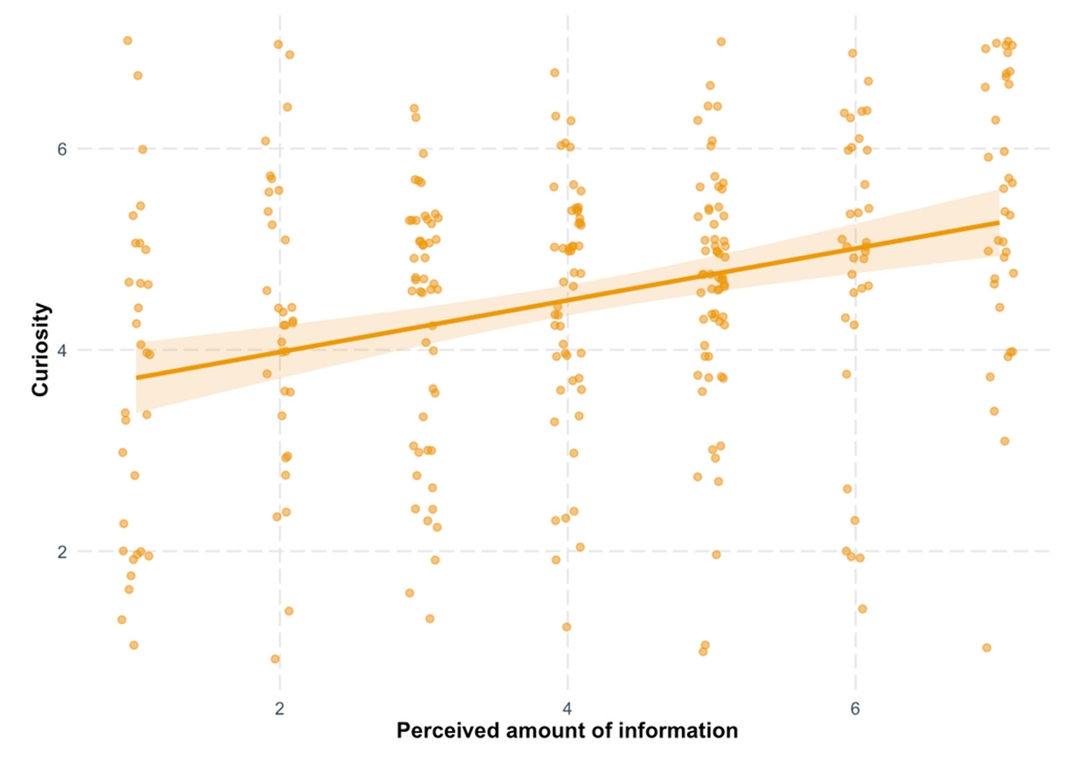
Graph Showing the Effect of the Perceived Level of Information Provision on Curiosity.
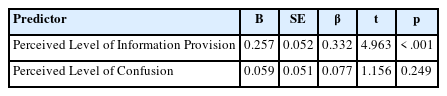
The Effect of Perceived Information Provision and Confusion Levels on Situational Curiosity
Discussion
Study 2 aimed to verify whether information gaps and ambiguity techniques could induce consumers' situational curiosity within the specific ethical consumption context of disability-friendly companies. However, prior to the main experiment, manipulation checks showed that the information gap condition was perceived as significantly lacking information compared to the control condition, indicating successful manipulation. In contrast, the ambiguity condition failed to independently induce significant confusion, resulting in manipulation failure. Notably, the information gap condition caused unintended effects, such as significantly higher cognitive confusion compared to the control group, beyond merely stimulating curiosity. Due to the failure of the ambiguity manipulation and limitations in controlling conditions, this study shifted from the originally planned hypothesis testing via mean comparisons between conditions to an exploratory analysis focusing on how respondents actually perceived the stimuli. Regression analysis using perceived information provision level and confusion variables revealed that when consumers felt the information in the advertisement was insufficient or ambiguous, curiosity was not induced. Conversely, the more consumers perceived the advertisement as providing sufficient information, the more situational curiosity toward the product significantly increased (B = 0.257, p < .001).
The manipulation failure and experimental design limitations in this study offer important methodological suggestions for future research. First, since the stimulus phrases and visual elements did not clearly induce the intended manipulations, subsequent studies should rigorously verify the validity of stimulus manipulations through preliminary pilot tests and strictly control wording and design elements to prevent overlap or interference between conditions. Second, this experiment only conducted post-measurements after stimulus presentation, lacking direct baseline comparisons of participants’ situational curiosity levels before and after exposure. Future research should incorporate pre-post measurement designs to clearly verify stimulus effects based on change scores.
The exploratory finding that ‘curiosity tends to increase as information sufficiency increases’ contrasts with the traditional information gap theory (Loewenstein, 1994) and prior research (Daume & Hüttl-Maack, 2020), which argue that information deficiency promotes curiosity. This discrepancy can be explained in two contexts. First, the specificity of the ethical consumption context, where the experimental stimulus modeled a socially value-driven company (disability-friendly company). In general commercial marketing, information gaps may simply trigger interest or playful curiosity, but in ethical consumption, consumers have strong motivation to verify the company’s social mission and authenticity. According to Orazi and Chan (2020), ambiguous environmental claims activate consumer skepticism and reduce corporate trust, whereas providing concrete and sufficient information significantly enhances positive consumer responses. Therefore, in ethical consumption contexts, artificially hiding or obscuring information may be perceived as opacity or lack of information rather than intrigue, risking trust erosion. In other words, for ethical products, ‘information sufficiency and transparency,’ rather than ‘information deficiency,’ may be the key factors eliciting genuine interest and curiosity.
Another explanation is the possible influence of Korea’s cultural context on stimulus interpretation and curiosity responses. East Asian consumers tend to have a stronger holistic thinking style (Choi et al., 2007), which may lead them to perceive ambiguous or information-omitted advertisements as more difficult to interpret and cognitively fatiguing (Chung et al., 2015). Additionally, domestic research (Kim, 2019) supports that in the Korean consumer context, providing explicit and sufficient information more effectively promotes curiosity and subsequent behavioral intentions. Therefore, future research should measure cultural thinking styles and perceived advertisement interpretive difficulty to conduct cross-cultural comparisons.
In summary, although Study 2 faced constraints in hypothesis testing via planned condition comparisons due to manipulation failure, the exploratory analysis based on participants’ actual perceptions yielded meaningful practical implications. In marketing communications for products with ethical and social values, rather than applying general curiosity-inducing techniques that control information, storytelling strategies that transparently and richly provide product characteristics and the company’s benevolent values are much more effective in enhancing consumer curiosity and engagement.
4. General Discussion
This research was conducted to reconfirm existing pathways explaining the intention–behavior gap in ethical consumption within a sample of Korean university students and to verify the role curiosity plays in this process. Study 1 successfully replicated significant antecedent pathways including prioritization, planning, and habit formation. Although the moderating effect of trait curiosity was not supported, curiosity independently predicted prioritization and an interaction effect was found in the sub-factor Stress Tolerance, suggesting that curiosity may influence antecedent processes rather than directly strengthening the intention–behavior link. In Study 2, the effects of information gap and ambiguity manipulations were tested; the information gap manipulation succeeded, but the ambiguity manipulation failed, limiting condition comparisons. Consequently, an exploratory analysis was conducted, which observed that perceived information sufficiency increased curiosity. This suggests that in the Korean and ethical consumption contexts, ‘clear information provision’ rather than ‘information deficiency’ may better connect to subsequent behavior.
This study provides important implications by examining how curiosity operates in ethical consumption contexts. Particularly, given the repeatedly reported intention–behavior gap where ethical awareness does not translate into actual consumption behavior, this research explored the psychological factor of curiosity linking ethical awareness and ethical consumption behavior. This is meaningful in that it adds psychological variables potentially operating in the transition process, even when existing explanatory pathways for ethical consumption exist. It also focuses on how individual traits, specifically trait curiosity, function in consumption situations. The approach assumes that ethical consumption is not solely determined by situational stimuli or information exposure but that individuals’ dispositional traits can influence prioritization of ethical concerns and subsequent processes. In Study 1, although total trait curiosity scores did not moderate the intention–prioritization relationship, they significantly predicted prioritization independently of intention. This suggests that curiosity may act more as a dispositional predictor encouraging individuals to regard ethical issues as important and seek information, rather than as a moderator directly strengthening the intention–behavior connection. Furthermore, this study highlights the need to consider curiosity at the sub-factor level rather than as a single construct. Additional analyses found a moderating effect in the Stress Tolerance sub-factor on the intention–prioritization relationship. Individuals high in Stress Tolerance exhibit curiosity-based on confidence in coping with anxiety and uncertainty. Conversely, those scoring low may avoid stress or respond maladaptively. This implies that high Stress Tolerance in ambiguous or tense situations may even delay behavioral change.
Practically, this study is distinctive in applying and directly testing curiosity-inducing techniques in the promotional strategies of social innovation enterprises. Existing curiosity marketing discussions have mainly focused on general companies and products, with relatively limited systematic verification in social innovation enterprise products. In this context, this study presents a novel approach by combining curiosity techniques with communication for social innovation enterprise products. Notably, Study 2’s results indicate that the general assumption ‘information gap marketing increases curiosity’ may not hold in ethical consumption contexts. Although manipulation failure limited hypothesis testing based on condition comparisons, exploratory analysis showed that perceived information sufficiency increased curiosity. This suggests that consumers of social innovation enterprise products require clear evidence of ‘why the product is ethical’ and ‘how it contributes,’ implying that providing sufficient and concrete information may better promote curiosity and subsequent behavioral intentions than mere information deficiency. Therefore, marketing strategies for social innovation enterprises may be better suited to providing credible evidence and detailed information while encouraging further exploration, rather than aiming for information gaps per se.
Additionally, Study 2’s findings suggest possible cultural differences in ethical consumption contexts. The tendency for curiosity to increase with perceived information sufficiency may reflect that Western-centric assumptions that ‘information gaps increase curiosity’ do not uniformly apply to Korean consumers. Considering East Asian holistic thinking styles, insufficient or ambiguous cues may increase interpretive burden and weaken curiosity. Thus, in the Korean context, providing clear information followed by encouraging additional exploration may be more effective, and future research should incorporate cultural variables.
This research newly explores the function of curiosity in ethical consumption contexts and presents both the applicability and limitations of curiosity-inducing strategies targeting social enterprise products. By considering individual trait variables in consumption situations, it provides a basis for more precisely explaining ethical consumption behavior. It also suggests that curiosity-inducing strategies centered on information gaps may operate differently in ethical consumption situations, emphasizing the need for strategy design that reflects product characteristics and ethical context in future research and practical applications.
From a sustainability perspective, this study offers substantial potential for extension in future research. First, based on the core variables and their relationships with curiosity identified here, interventions (message composition methods, information presentation strategies, storytelling, etc.) that help consumers maintain ethical issues as "major concerns" over time can be compared and verified. Second, it is necessary to explore conditions that increase repurchase rates directly linked to corporate sustainability beyond one-time purchases. For example, further research can investigate which information provision methods and experience designs are effective in forming repeated purchases after the initial purchase, and how planning and habit formation processes lead to repurchase behavior. Third, by expanding the context of this study—disability-friendly companies—to other social issue areas such as environment, fair trade, and community, it is possible to compare whether the same mechanisms operate and propose more generalized strategies applicable across ethical enterprises.